

The Early Days: Building on a Shoestring
When we launched our SaaS product, our entire infrastructure ran on a single $20/month server. We had no CDN, no load balancer, and our database was on the same machine as our application server. It sounds reckless in hindsight, but it was exactly the right call. At zero users, your biggest risk is not scaling problems — it is building something nobody wants. Every dollar we saved on infrastructure went into customer discovery calls and rapid iteration.
The first real scaling challenge hit at around 500 concurrent users. Our monolithic Node.js application started dropping requests during peak hours, and database queries that took 50ms at launch were now crawling at 3 seconds. We spent a frantic weekend migrating to a managed PostgreSQL instance and adding Redis for session caching. The lesson was clear: you do not need to over-engineer from day one, but you need to know when the cracks are forming.
The Architecture Pivot That Changed Everything
At 2,000 users, we made our most consequential technical decision: breaking our monolith into three services. Authentication and billing became their own service, the core product API stood alone, and we extracted our real-time collaboration engine into a WebSocket-based microservice. This was not a textbook microservices migration — we kept it minimal and only split along natural fault lines where one component’s failure was cascading into others.
The impact was immediate. Deploys went from 15-minute affairs with scheduled downtime to zero-downtime rolling updates that took 90 seconds. Our on-call engineers stopped getting paged for billing-related issues crashing the main app. More importantly, different teams could now ship features at their own pace without stepping on each other’s code.
Observability as a Growth Multiplier
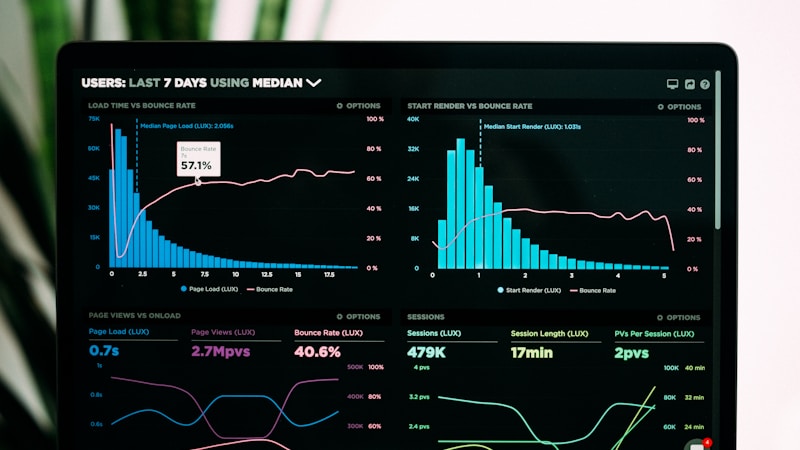
The investment that paid the highest dividends was not a new feature — it was observability. We instrumented everything: API response times, database query durations, error rates by endpoint, and user-facing performance metrics. When a customer reported that “the app feels slow,” we could pinpoint the exact query, on the exact table, with the exact missing index within minutes instead of days.
We also started tracking business metrics alongside technical ones in the same dashboards. Seeing that a 200ms increase in API latency correlated with a 5% drop in user engagement gave engineering decisions a direct line to business outcomes. This made it far easier to justify infrastructure investments to the broader team.
What We Would Do Differently
If we were starting over today, we would invest in end-to-end testing from week one. The number of regressions we shipped to production because we relied solely on unit tests and manual QA was embarrassing. We would also adopt feature flags earlier — they became our most powerful tool for safe deployments, but we did not add them until user 5,000. Finally, we would write runbooks for every incident from the start. The knowledge trapped in Slack threads during 2 AM outages is knowledge that gets lost forever.